The Ultimate Mediterranean Escape: Why Corsica is Replacing Italy and Greece This Summer
The traditional Mediterranean summer that North American travelers have booked for the past decade is undergoing a massive shift. The dream of a relaxing European getaway has increasingly collided with the reality of unprecedented overcrowding. In 2025, visitor bookings for iconic destinations like Santorini dropped by 50 percent, while Mykonos saw a 33 percent decline. Zakynthos quietly became the most congested island in Europe, reaching a peak of 150 tourists per local resident. To mitigate the strain, Greece introduced a 20 euro cruise passenger tax in July 2025, and several islands were forced to declare water emergencies. Even the historic agricultural landscapes are impacted, with Santorini vineyards shrinking by 70 percent in a single generation.
Italy is experiencing its own version of this infrastructure crisis. Taormina has essentially transformed into a film set with matching premium hotel rates, while the famous Costa Smeralda in Sardinia has become an exclusive yacht parking lot. Travelers now feel the crunch in small, frustrating ways: restaurants in Capri refusing reservations before 8 p.m., paying 18 euros for a spritz served in a plastic cup, or standing in 6 a.m. ferry lines just to catch a boat to Hydra. The effortless Mediterranean experience popularized by social media is becoming nearly impossible to find in these traditional hubs.
Fortunately, there is an elegant alternative. Tucked away in plain sight is a magnificent French island that remains largely undiscovered by the broader international market. Welcome to Corsica.
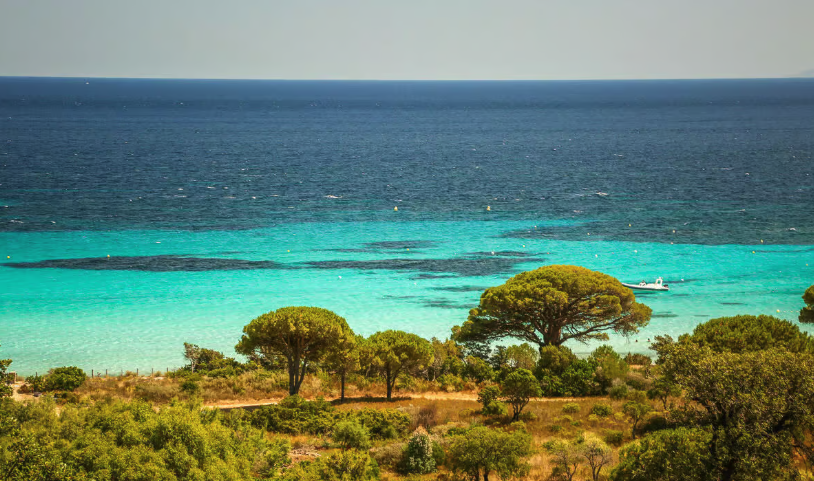
Tamaricciu
A Perfect Tuesday in Southern Corsica
To truly understand the allure of this island, you must experience its daily rhythm. Imagine waking up early to a morning light that is simply too beautiful to sleep through. By 7:30 a.m. you are walking down a pristine sandy path lined with parasol pines toward Palombaggia beach. Here, the striking granite is the color of rust and the calm water is already warm. At this hour, you have the entire coast to yourself. You can swim out to where the seabed drops off, watching the water shift from brilliant white to turquoise, and finally into a deep blue that feels entirely unique.
After your swim, you head inland to a local bakery in the village of Lecci. You pick up a slice of fiadone, the traditional Corsican cheesecake made with fresh brocciu cheese, lemon zest, and a splash of local eau de vie liqueur.
By 11 a.m. you drive twenty minutes up into the dramatic Alta Rocca mountains to visit a stone village called Quenza, which sits two thousand feet above sea level. The mountain road winds through ancient cork oak forests. At a sharp hairpin turn, you stop to look back: from this vantage point, you can see the exact glittering sea you swam in just a few hours prior, shimmering thousands of feet below.
For lunch, you stop at a rustic hillside auberge. You are served authentic charcuterie cured by the owner's brother in the adjacent valley, accompanied by a glass of exceptional local rosé that costs just 6 euros. The entire bill for two comes to a modest 54 euros. By 5 p.m. you are back on the sand, staying until the golden hour turns the granite cliffs into the warm color of a peach. This is not a rare, curated itinerary: this is simply what a typical Tuesday looks like here.
Defining L'Île de Beauté
Corsica is situated roughly 100 miles south of the French Riviera and 50 miles west of Tuscany. It is politically French but entirely distinct culturally. The geography is stunningly dramatic, featuring 9,000 foot peaks that can hold snow as late as June, all visible right from the beach. It is wilder and greener than almost anywhere else in the region, characterized by thick underbrush where wild boar roam, vibrant rust colored granite, and coastal waters that rival the clarity of the Bahamas.
The French refer to it directly as L'Île de Beauté, the Island of Beauty. It possesses every single ingredient required for an elite European vacation: white sand beaches, medieval fortress towns, world class vineyards, vibrant harbors, and historic mountain villages. What sets it apart in 2026 is its preserved quietness. The interior mountains remain beautifully uncrowded, the luxury hotels feel like private residential villas rather than massive commercial chains, and even the premier coastlines remain remarkably underbooked compared to Greece or Italy.
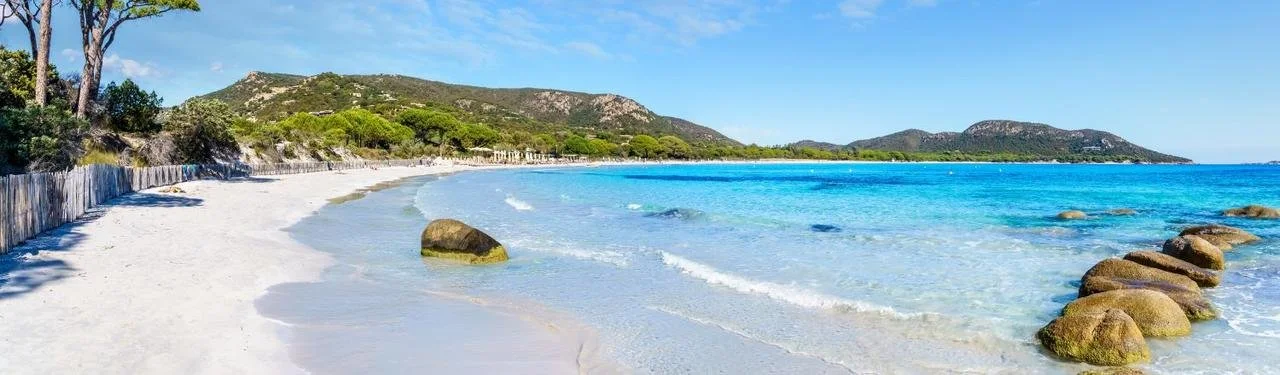
Palombaggia beach.
How Corsica Compares to the Competition
When choosing your next summer destination, it helps to understand exactly how Corsica stacks up against the traditional heavyweights.
Corsica vs Sicily
Sicily is an unparalleled cultural and historical feast. It offers ancient Greco Roman ruins, majestic Norman cathedrals, bustling Arab Sicilian markets, and the dramatic backdrop of Mount Etna. If your primary goal is a trip layered with deep ancient history, Sicily is an excellent choice.
However, Sicily can no longer offer a sense of quiet isolation or pristine water clarity. The summer crowds in hotspots like Taormina, Cefalù, and Syracuse run parallel to the busiest parts of mainland Europe, and navigating the long distances between cities by car can be genuinely exhausting.
The Verdict: Choose Sicily if you want to come home with historical stories. Choose Corsica if you want to come home with the feeling of having had an entire island paradise to yourself.
Corsica vs Sardinia
This is the comparison that luxury travelers agonize over the most. Sardinia is a larger island with flatter coastlines, expansive stretches of beach, and a highly polished luxury infrastructure centered around elite hubs like Porto Cervo and the Costa Smeralda. It also features more direct flight connections and simpler ferry routes from mainland Europe.
Corsica counterbalances this with dramatic mountain ranges that rise directly out of the sea, an undeveloped interior that feels beautifully preserved in time, and a fascinating cultural complexity. It feels uniquely French yet distinctively Italian, and you will regularly hear the local Corsu language spoken in village squares.
The Verdict: Choose Sardinia if the beach is your entire focus and you prefer predictable resort luxury. Choose Corsica if you want spectacular beaches combined with mountain drives and authentic meals in villages where life moves slowly.
Corsica vs The Greek Islands
At present, this is a lopsided comparison. The main Greek islands are facing a severe infrastructure crisis that is openly covered in the local press, including frequent power cuts, strict water rationing, garbage management issues, and intense cruise ship saturation. Even the most exclusive hotels in Santorini cannot fully insulate guests from the peak summer crowds. While lesser known gems like Folegandros or Sifnos remain beautiful during the shoulder season, the primary hubs are under immense strain.
The Verdict: Choose Greece if you are firmly set on the specific blue and white dome aesthetic and can travel during the off peak months. Choose Corsica if you want a premium Mediterranean vacation with pristine water, deep culinary traditions, and absolutely zero infrastructure stress.
Geography and Regions: Where to Anchor Your Stay
Corsica is an island that rewards exploration. It spans roughly 110 miles from north to south, but because of the rugged mountain terrain, driving from coast to coast can take up to five hours. To experience it properly, you will want a dedicated rental vehicle and ideally two separate bases.
The South: Porto-Vecchio and Bonifacio
This region is home to the island's most legendary coastlines. Palombaggia, Santa Giulia, and Rondinara are consistently ranked among the most beautiful beaches in the Mediterranean due to their bright white sand, orange granite, and multi hued turquoise water. Basing yourself near Porto-Vecchio provides seamless access to these shores.
Just 25 minutes south lies Bonifacio, a breathtaking Genoese fortress town built directly onto white limestone cliffs that plunge straight into the sea. The old town citadel sits high above a harbor lined with excellent restaurants. A highlight here is the King of Aragon's Staircase, featuring 187 steps carved directly into the cliff face leading down to a coastal cave. It is best to complete this climb early in the morning before the sun is overhead.
Premium Accommodations: Grand Hôtel de Cala Rossa, Les Bergeries de Palombaggia, and Casadelmar are the three most sought after luxury properties in the south. They routinely book out six to nine months in advance for the peak summer months.
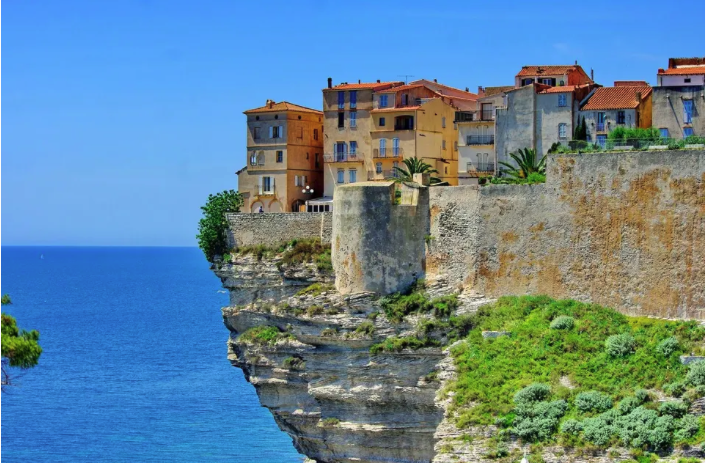
Bonifacio
The Northwest: Calvi and the Balagne
This area offers an entirely different perspective of Corsica. Calvi is a historic fortress town boasting one of the most stunning crescent beaches in Europe. Its towering Genoese citadel allows you to dine at sunset while watching the harbor lights flicker on below.
Inland from Calvi lies the Balagne, a scenic landscape dotted with traditional stone villages including Sant'Antonino, Pigna, Corbara, and Speloncato. Here you will find narrow lanes, virtually no traffic, and small local restaurants serving authentic charcuterie and exceptionally fresh brocciu cheese. This region is ideal for travelers who want to relax on the beach in the morning and explore quiet mountain villages by 4 p.m.
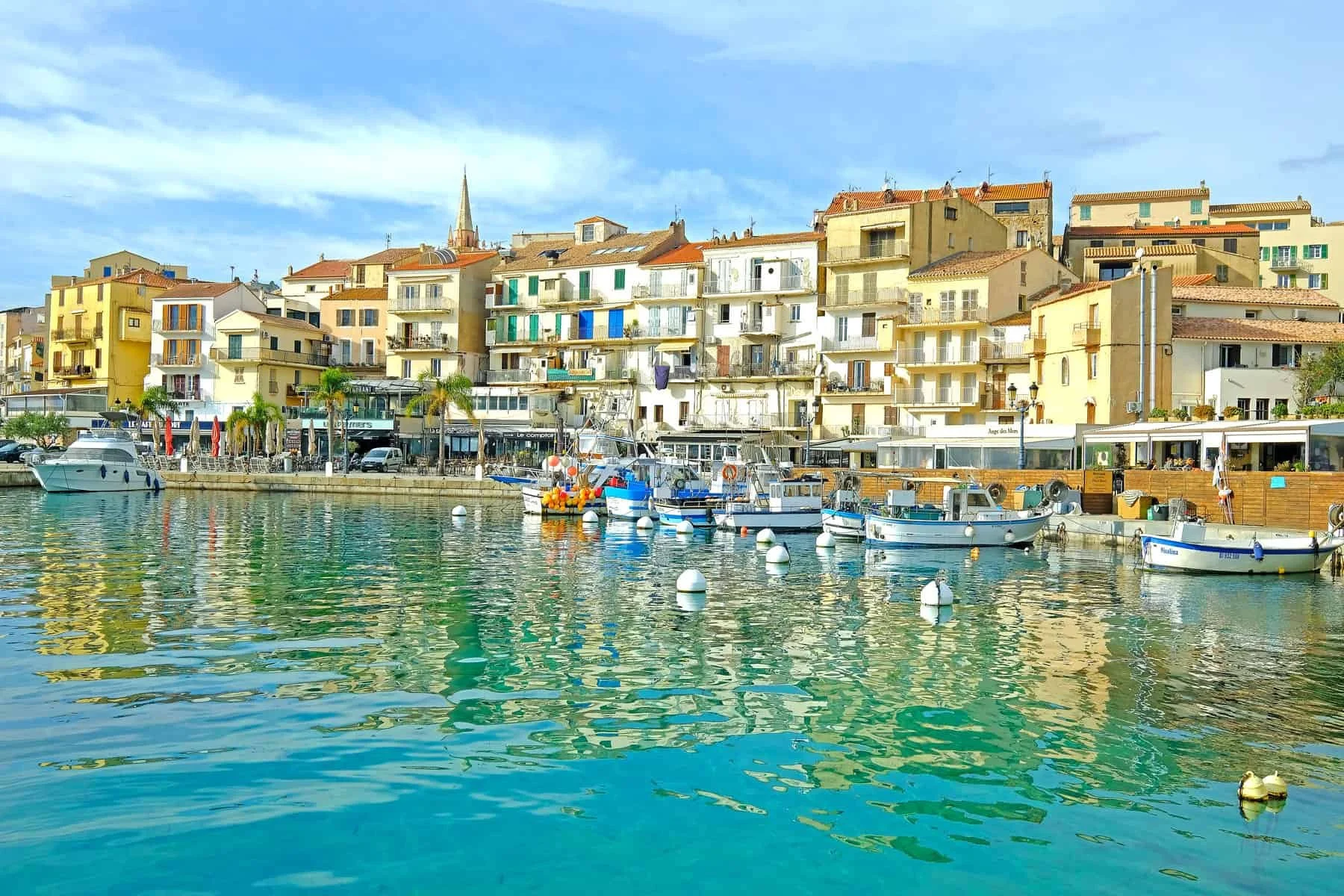
Calvi
Cap Corse: The Wild North
The northern finger of land known as Cap Corse is wild, rugged, and features far fewer hotels. It is defined by winding coastal roads and tiny, authentic fishing villages such as Centuri, Erbalunga, and Macinaggio. While it is generally recommended for a second or third visit rather than a first trip, it offers a glimpse into the island's most untamed side.
Timing and Travel Realities
When to Visit
Late May, June, and September are the absolute best months to plan your trip. The water is warm, crowds are perfectly manageable, pricing is reasonable, and all seasonal venues are open. July brings more European holiday travelers and beaches begin to fill by 10 a.m., making advance reservations essential. August is the month to avoid if possible, as mainland France arrives for summer holidays, causing prices to double and beaches to crowd. From October through April, the island enters a quiet period, and many premier hotels and restaurants close completely from November to March.
How to Arrive From North America
While there are no direct transatlantic flights, routing is highly manageable. The most seamless method is to fly into Paris or Nice and catch a short connection to one of Corsica's four regional airports:
Figari (FSC): Ideal for accessing Porto-Vecchio and Bonifacio in the south.
Calvi (CLY): Perfect for the northwest and the Balagne region.
Ajaccio (AJA): Convenient for the western coast and southern regions.
Bastia (BIA): Best for Cap Corse and the northern territory.
Air Corsica, Air France, and easyJet service these domestic routes frequently, bringing total travel time from the East Coast to around 13 to 15 hours. For a more scenic journey, you can fly into Nice and take a romantic 13 hour overnight ferry to Bastia with your rental vehicle onboard.
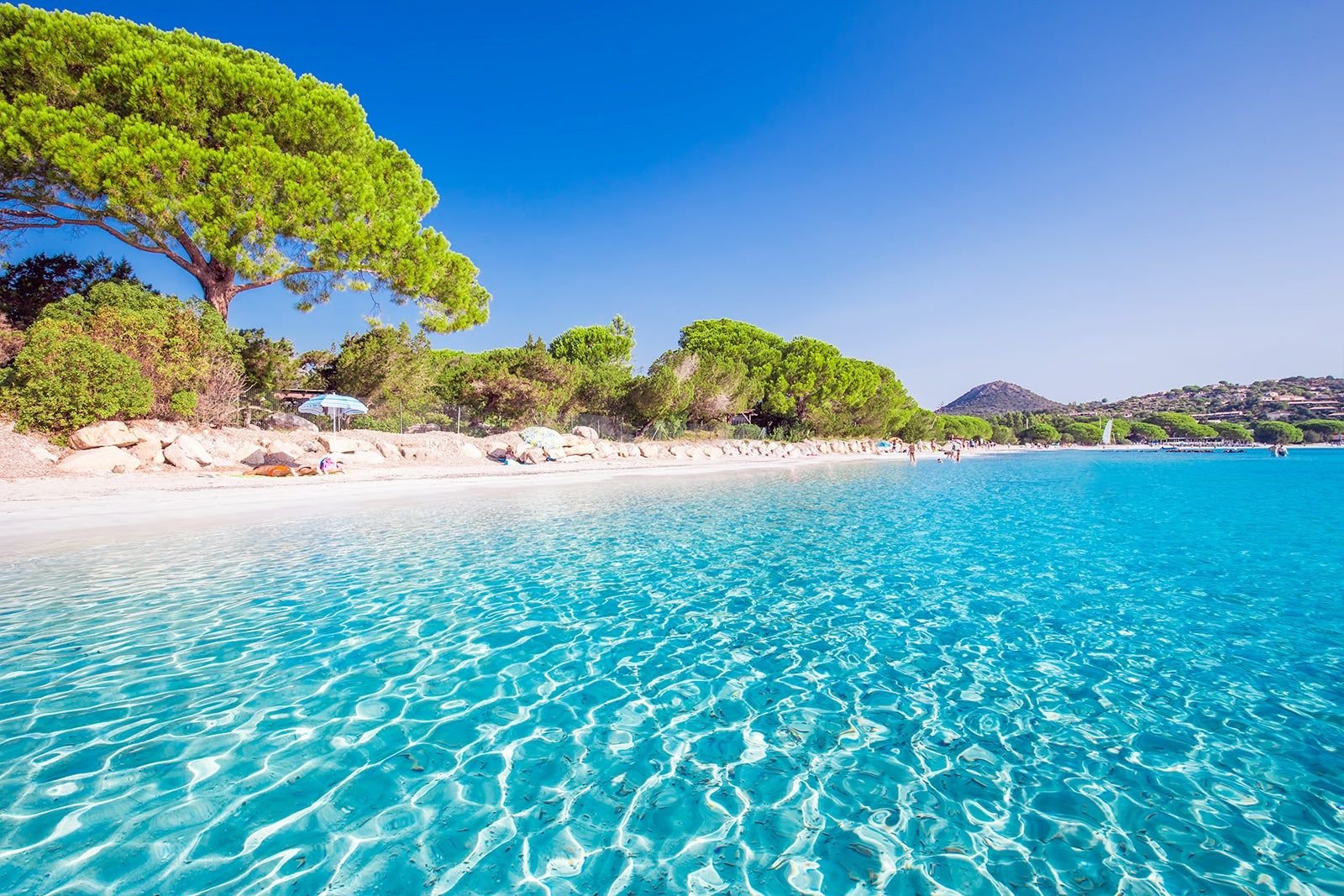
Beach in Corsica
The Honest Tradeoffs
Before booking your stay, there are three important factors to keep in mind:
The Investment: Corsica commands premium pricing compared to Sicily or Sardinia. High end boutique hotels range from 450 to 1,200 euros per night during peak season, meaning a custom weekly itinerary for two typically ranges between 4,500 and over 15,000 euros before flights.
The Transportation: A rental car is completely non-negotiable. While public transit exists within the main towns, the true magic of the island lies in navigating the hidden coves, mountain passes, and remote villages.
The Language: English is less widely spoken here than in the heavily touristed areas of Greece or Italy. While luxury properties and major restaurants handle English perfectly, local village markets and country auberges operate primary in French or Corsu. Learning a few polite phrases will go an incredibly long way.
Hand Over the Mental Load of Your Next Escape
Picture the final evening of your journey. You are sitting at a hand carved wooden table on an outdoor terrace high within the historic citadel of Calvi. The sun is dipping below the horizon, casting a golden glow over the sea. Your waiter brings a chilled bottle of Patrimonio rosé served in a classic ceramic pitcher. A few cobblestone streets over, you can hear a group of local men singing traditional polyphonic harmony, an ancient Corsican art form that has existed on this island for a millennium.
You realize you have not checked your phone since lunchtime, and you have no desire to check it tonight. This is the exact feeling of total restoration you have been searching for.
Planning an intricate, multi stop itinerary through an island as geographically complex as Corsica requires extensive logistics, from securing the right vehicle to vetting exclusive boutique properties that book out nearly a year in advance. You do not have to treat your personal downtime like an exhausting second job.
I help busy women hand over the mental load of trip planning so they can experience seamless, elevated travel designed exactly for who they are. Let me manage the heavy lifting, the logistics, and the reservations while you focus entirely on the excitement of your next getaway. If you are ready to explore my curated selection of private villas, luxury charters, and boutique resorts across Corsica, contact me today to schedule your discovery call.