How to Plan Your First Antarctica Cruise Without the 11 PM Logistical Melt
It is 11 PM on a Tuesday. You have 40 browser tabs open.
You are staring at maps of the Southern Ocean, trying to calculate how many vacation days it takes to sail across the Drake Passage, and looking at giant, bright red parkas online. You want to see the raw, monumental scale of the 7th Continent—you want the penguins, the calving glaciers, and the absolute silence.
Then the planning reality hits. You realize you have to figure out the exact charter flight connections through southern Patagonia, decipher which expedition ships are small enough to actually let you step foot on the ice, and cross-reference polar weather windows with your corporate calendar. Suddenly, the bucket-list trip of a lifetime feels like a massive second project landing squarely on your desk.
Your brain already knows you need a profound reset, but the execution phase keeps stalling because you are already making high-stakes decisions all day at work and at home. If your idea of an expedition involves acting as the administrative coordinator for your own polar escape, keep scrolling.
You should not have to be the logistical manager of your own awe.
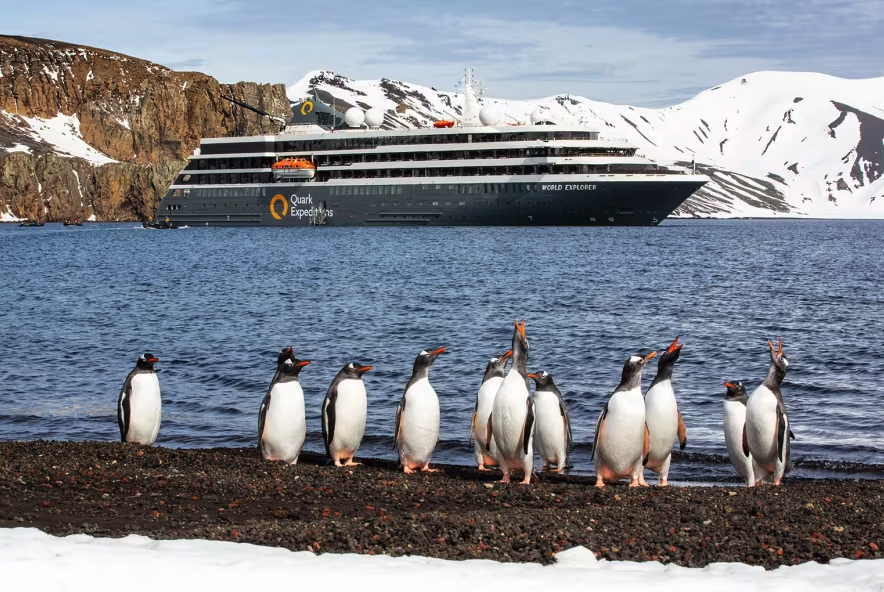
The Drake Passage Dilemma: Flying vs. Sailing
Let’s be honest about the classic Antarctica itinerary. Historically, getting to the Antarctic Peninsula required sailing for two full days through the Drake Passage—some of the roughest, most unpredictable open water on the planet. For a busy professional, spending four days of your limited vacation time simply navigating open ocean while dealing with motion sickness is a massive bottleneck.
There is a completely different way to look at the 7th Continent without the logistical drag: The Fly-the-Drake Express.
By stepping onto a specialized charter flight in Punta Arenas, Chile, you fly right over the Drake Passage and land directly on King George Island in Antarctica in just under three hours. You completely bypass the open-ocean transit. You step off the plane, walk to the shore, board a waiting zodiac, and embark on your ship.
You trade four days of open-ocean sailing for an immediate, time-saving entry into the ice.
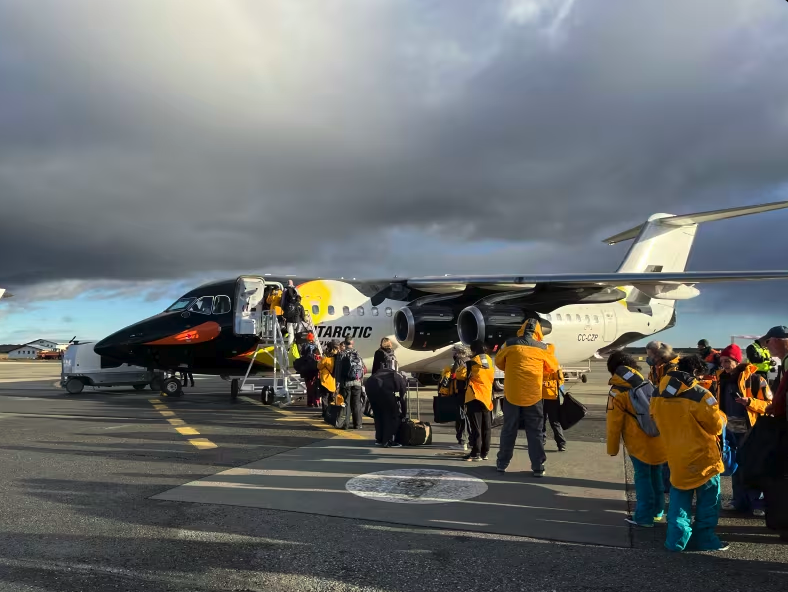
Plane flying over the Drake passage
What a Week in the Ice Actually Looks Like
This is the part most high-achievers underestimate: a polar expedition is not a passive vacation where you sit behind glass. It is an active, evolving journey where nature calls the shots and the pacing adapts completely to the environment.
When you navigate the South Shetland Islands and the Antarctic Peninsula, the itinerary is fluid, but the daily reality is incredibly vivid:
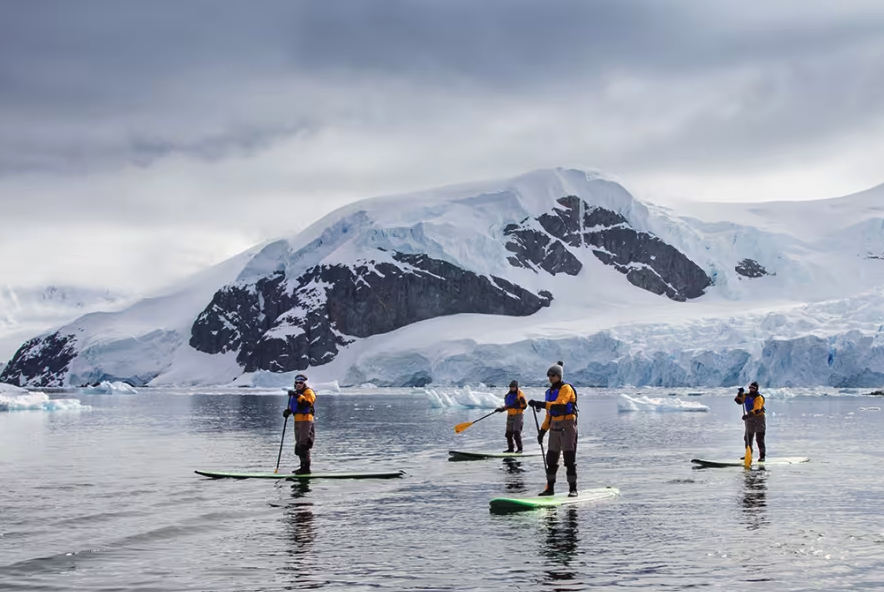
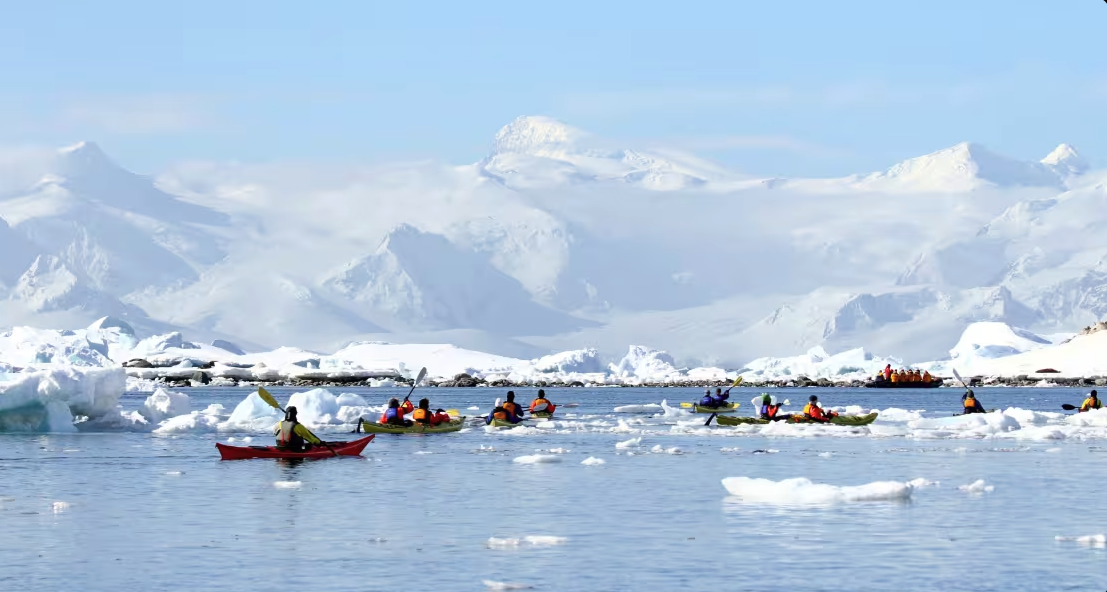
The Excursions: Your days alternate between drop-down zodiac cruises to weave between sculpted blue icebergs and guided shore hikes. You will walk right onto beaches inhabited by thousands of Adélie, gentoo, and chinstrap penguins.
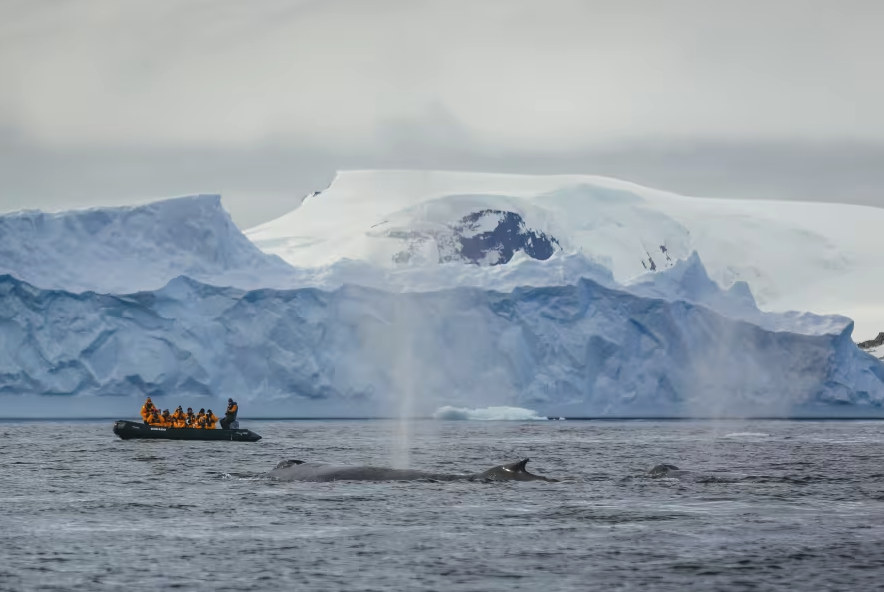
The Wildlife Encounters: While the captain keeps a lookout for apex predators like leopard seals and orcas, you will head out in zodiacs to get water-level views of feeding humpback whales.
The Polar Micro-Lab: Onboard a modern, 168-passenger ship like the World Voyager, the experience is built around science and discovery. You can spend your afternoons listening to polar experts break down the glaciology, history, and geology of the paths you just walked, or head to the onboard Science Hub.
The Unscripted Shifts: You might be midway through breakfast when the expedition leader alerts the ship to a pod of whales putting on a display right off the bow, completely shifting the morning's landing plans to get you closer to the action.
When you return to the ship after a day on the ice, the environment shifts back to complete comfort. You can drop your gear in the ready room, spend an hour in the glass-fronted sauna or outdoor jacuzzis, and meet in the observation lounge for a drink before dinner.
An extraordinary polar itinerary requires invisible logistics, custom coordination, and meticulous follow-through. It shouldn't consume what little free time you have left at the end of a demanding week.
How I Take the Project Off Your Shoulders
I look at this industry without the standard corporate fluff, and I don't hand you standard brochures to decipher. I know how these remote operations run behind the scenes—from flight charter mechanics in Patagonia to the exact gear lists you need to stay comfortable on a zodiac cruise.
When you hand a complex polar expedition over to me, it immediately ceases to be a project on your desk. I have built my agency around concrete service tools designed to handle the exact administrative weight that is currently depleting you:
The Client App (The Death of Email Overload): We do not communicate through a chaotic, fifty-message email chain. Your expedition proposals, polar clothing checklists, flight numbers, and daily schedules live in one single, private portal on your phone. You can access every moving part of your journey in two clicks.
Complete Trip Bundles: I don’t just reserve the ship cabin and leave you to stitch together premium long-haul flights to Chile, pre-expedition hotel overnights in Punta Arenas, or local airport transfers. I own the entire logistics loop under a single package, ensuring your transition from your busy life to the edge of the world is entirely managed.
Certified Travel Advisor vs. Algorithms: You are not relying on AI travel tools or saved-for-later Instagram posts to navigate the sub-Antarctic. You receive a dedicated professional backed by direct partner relationships with premium operators like Quark Expeditions. I handle the moving pieces so nothing falls into the gaps.
Stop staring at the open tabs and trying to calculate flight connections at midnight. Close the computer. I want you to exhale. From here, I am taking care of everything so you can soften.